
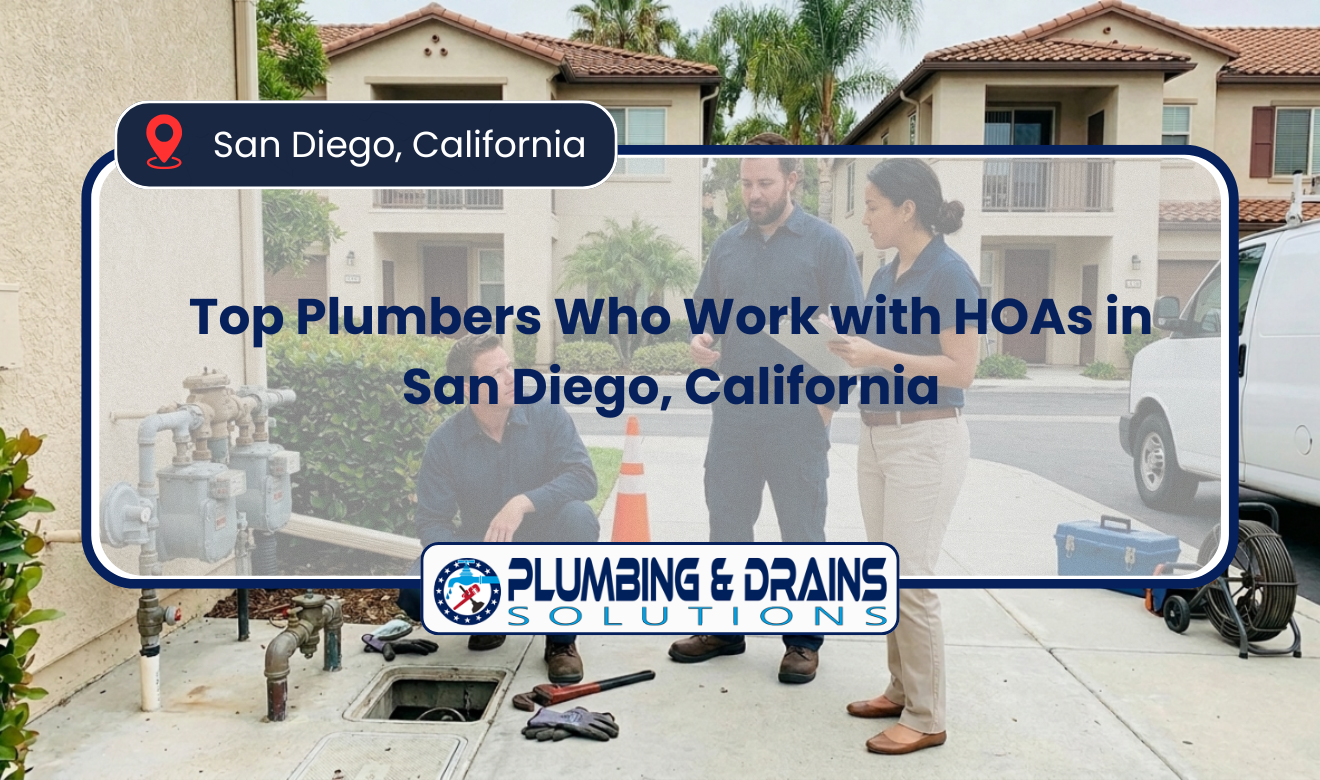
Plumbers who work with HOAs in San Diego resolve shared-building plumbing issues by verifying responsibility through CC&Rs, recorded plans, and field testing, then delivering board-ready scopes with compliant vendor paperwork and inspection-ready details. The most reliable outcomes come from evidence-based diagnostics, coordinated unit access and shutoffs, and closeout documentation that supports approvals, records, and insurance needs.
- Responsibility Is Documented, Not Assumed: HOA plumbing responsibility is determined by aligning governing documents and recorded maps with on-site verification (camera, isolation, pressure, and access checks) so the correct party can authorize and fund repairs.
- Compliance Drives Approval Speed: Boards and property managers typically require license verification, COIs, W-9s, and itemized proposals with access/shutoff plans, making proper documentation essential to start work without delays.
- Diagnostics + Closeout Prevent Repeat Costs: A confirm-first workflow (pattern mapping, camera evidence, targeted clearing, and post-repair stack testing) paired with before/after photos and test results reduces callbacks and strengthens board, reserve, and insurance decision-making.
Plumbers who work with HOAs in San Diego are licensed contractors who manage shared-building plumbing systems and HOA-governed repairs under board rules, CC&Rs, and vendor requirements. They handle common-area lines, multi-unit stacks, and building-wide shutoffs in condos, townhomes, and mixed-use properties across neighborhoods like Downtown, Mission Valley, Mira Mesa, and North Park. They coordinate access to units for stack testing, schedule work around quiet hours, and document approvals for boards and property managers. They diagnose recurring backups on main sewer laterals, clear grease and scale with hydro-jetting, and locate breaks or bellies with sewer camera inspections. They repair pressure regulators, isolation valves, and backflow assemblies, and they address slab leaks and pinhole leaks common in older copper lines. They provide itemized proposals with labor, materials, and restoration notes, plus before-and-after photos for meeting packets. They produce COIs, W-9s, and permit-ready scopes when City of San Diego inspections are required, such as for water heater replacements, gas line work, or backflow compliance. They also support emergency response with rapid shutoff, temporary bypass piping, moisture control steps, and written incident summaries for insurance and reserve planning.
How HOA Plumbing Responsibility Is Determined in San Diego
HOA plumbing decisions start with ownership boundaries and written governing documents. The practical goal is to confirm whether a defect is in a common element, exclusive-use common area, or part of a unit so the correct party can authorize and pay for the work.
For condos and townhomes, the first step is aligning three items:
- CC&Rs and Rules: These define what the association maintains (often mains, vertical stacks, common-area drains, and shared shutoff valves) versus what an owner maintains (often fixtures and branch lines serving only one unit).
- Recorded condo plan / tract map: Helps interpret boundaries (walls, slabs, utility chases) when a leak is hidden.
- Field verification: Camera inspection, isolation testing, pressure testing, and access-panel checks confirm the actual piping route.
Because HOAs must follow board authorization requirements, plumbers accustomed to association work typically provide a scope that clearly states:
- What was tested and observed
- Where the failure appears to be located (e.g., “vertical waste stack between Units 204 and 304”)
- What access is required (units, common corridors, roof, garage)
- What restoration is excluded or included (drywall, cabinetry, flooring, paint)
Vendor Compliance: What Boards and Property Managers Usually Require
San Diego HOAs commonly require standardized onboarding documents before any work begins. This is to reduce liability exposure and ensure the contractor is eligible under the association’s vendor rules.
Expect a contractor working with associations to provide, upon request:
- California contractor license verification appropriate to plumbing work (typically C-36 Plumbing).
- Certificate of Insurance (COI) showing general liability and workers’ compensation as required by the management company or board policy.
- W-9 for vendor setup and 1099 compliance.
- Written proposal formatted for approval (line items, not a single lump sum).
- Jobsite plan for unit entry, shutoffs, water outage notices, and protection of common areas (drop cloths, negative air if needed).
In multi-unit buildings, the paperwork is not a formality—it supports traceability for board minutes, architectural logs (when wall openings are involved), and insurance claims documentation.
Common HOA Plumbing Scenarios in Condos, Townhomes, and Mixed-Use Buildings
Association plumbing work clusters around systems shared by multiple units and components that can damage multiple homes when they fail. The highest-impact issues are blockages and leaks in shared distribution and drainage paths.
Typical HOA-governed service calls include:
- Main sewer lateral backups impacting first-floor units, garages, or common restrooms.
- Multi-story stack problems such as recurring clogs, venting issues, or cast iron deterioration.
- Building shutoff and isolation valve failures that prevent safe repairs without cutting water to the whole property.
- Pressure problems that create fixture damage or pinhole leaks when a pressure regulator fails or is missing.
- Backflow compliance on irrigation, fire service (as applicable), or domestic lines requiring testing and repair.
- Slab leaks in older buildings with copper lines routed under concrete floors.
When multiple residents report the same symptom (gurgling, slow drains, odor after rains), a structured diagnostic plan reduces repeated callouts and avoids replacing fixtures when the real issue is the shared line.
Diagnostic Workflow That Minimizes Repeat Callbacks
The most effective HOA plumbing work uses confirm-first diagnostics before demolition or re-piping. This prevents unnecessary wall openings and improves the accuracy of board-approved scopes.
A proven sequence for shared-system issues:
- Interview + pattern mapping: Document which units are affected, which fixtures, and what times (e.g., “backup during laundry hours”).
- Access and isolation: Identify shutoffs serving stacks, wings, or risers to test without shutting down the entire building.
- Line-of-sight verification: Use cleanouts, roof vents, garage access panels, and irrigation vaults to locate service points.
- Sewer camera inspection: Confirm root intrusion, scale, offsets, bellies, or breaks; capture video/stills for the meeting packet.
- Targeted clearing: Use mechanical cabling for localized clogs or hydro-jetting for grease/scale where pipe condition permits.
- Post-verification test: Run simultaneous fixture loads (stack test) to confirm capacity and vent performance.
When recurring blockages are the issue, selecting the right method matters. For example, hydro-jetting is frequently chosen for grease and hardened buildup because it restores the full internal diameter more effectively than a cable in many cases; a dedicated Hydrojetting scope should list access points, downstream containment, and confirmation testing.
San Diego Permit Triggers and Code-Critical Items (What Boards Need to Know)
Some plumbing work in the City of San Diego requires permits and inspections, and boards generally prefer permit-ready scopes to avoid delays. The key is to identify whether the job alters regulated systems like gas piping, water heaters, or backflow prevention assemblies.
Common HOA situations where permitting or inspection is often involved:
- Water heater replacements (especially when changing location, fuel type, venting, or adding required safety components).
- Gas line work (repairs, extensions, re-piping, appliance changes).
- Backflow prevention installation or replacement where compliance testing is required.
- Major sewer repairs involving excavation in public right-of-way or significant reconfiguration on private property (scope-dependent).
Because plumbing is a regulated trade with defined material and installation standards, HOA proposals should reference measurable deliverables: valve type and size, pressure setting range for regulators, backflow model/testing requirements, and any access panel requirements for future service. A clear scope also helps property managers coordinate inspection scheduling and unit notices.
Emergency Response for Associations: Containment, Documentation, and Restoration Hand-off
HOA emergencies require immediate system control and a written incident trail for insurance and board records. The priority is to stop water migration, protect electrical hazards, and document conditions before materials are disturbed.
A disciplined emergency process typically includes:
- Rapid shutoff: Identify and close the nearest effective isolation valve (unit, riser, or building main). If valves fail, implement temporary bypass or targeted shutoff strategy.
- Source confirmation: Determine if the event is supply-side (pressurized) or drain-side (backup/overflow), because the mitigation steps differ.
- Moisture control steps: Initial extraction, airflow planning, and moisture mapping to reduce secondary damage (warping, microbial growth).
- Photo and note package: Before/after photos of affected areas, meter readings when relevant, and a timeline of actions taken.
- Stabilization repairs: Temporary caps, isolation valve replacement, or localized pipe repair to restore service safely.
For ongoing prevention, residents and onsite teams should recognize early warning signs such as gurgling fixtures and slow drains; practical guidance is outlined in reasons the gurgling sound of your sink is alarming, which can help reduce “wait-and-see” delays that turn into after-hours floods.
Board-Ready Proposals: What to Include for Fast Approvals
Board approvals move faster when the proposal is structured for decision-making and future audits. The best scopes separate diagnosis, repair, and restoration so the HOA can allocate reserve vs. operating expenses appropriately.
For HOA packages, include:
- Problem statement: Symptom history and which areas are impacted.
- Diagnostic evidence: Camera findings, photos, pressure readings, and test results.
- Scope of work: Step-by-step tasks, including access needs and shutoff duration.
- Materials list: Pipe type, fittings, valves, PRV model/range, backflow assembly details.
- Exclusions and assumptions: Restoration limits, hazardous materials handling if suspected, unknown conditions behind walls/slabs.
- Schedule windows: Proposed dates, quiet-hour compliance, and unit-entry coordination requirements.
- Closeout deliverables: Photos, test confirmation, and an invoice matching approved line items.
This format is especially important when multiple vendors bid, because it allows like-for-like comparisons instead of competing on vague language.
Key HOA Plumbing Metrics (San Diego Operations Snapshot)
This table translates HOA plumbing into board-level metrics and job specs. Use it to align scope language with local operational realities like unit access, inspections, and documentation.
| Feature / Metric | Specifications | Local Guidelines |
|---|---|---|
| Access coordination | Unit entry scheduling, stack testing windows, and shutoff mapping (unit/riser/main) | Provide written notices through property management and comply with HOA quiet hours and elevator/corridor protection rules |
| Sewer diagnosis | Camera inspection via cleanout/roof vent; identify offsets, bellies, roots, scale, or structural failure | Deliver video/photos suitable for board packets; document location references (garage bay, landscape zone, unit stack) |
| Drain clearing method selection | Cable for localized obstructions; jetting for grease/scale buildup where pipe condition allows | Confirm pipe material/condition first to avoid damage; include a post-clear verification test in the scope |
| Leak documentation | Photos, moisture readings (when available), and exact source location (supply vs. drain) | Maintain an incident timeline for insurance; record shutoff times and affected units/common areas |
| Regulated work readiness | Permit-ready scope for water heaters, gas piping, and backflow-related work when applicable | Coordinate City inspections through property management; keep COI/W-9 current for vendor compliance |
Preventive Maintenance Programs That Reduce HOA Cost Spikes
Preventive maintenance for shared plumbing is most effective when it targets known failure points: sewers, pressure control, and isolation valves. Associations that schedule periodic verification avoid repeat emergency calls and minimize multi-unit water damage.
A practical HOA maintenance plan often includes:
- Annual or as-needed camera scans of main lines and known trouble segments (especially older cast iron or heavy root zones).
- Routine drain line cleaning in high-load areas (clubhouses, common restrooms, ground-floor stacks).
- Pressure checks to confirm the pressure regulator is functioning and not over-pressurizing branch lines.
- Exercise/replace isolation valves so shutoffs actually work during emergencies.
- Backflow testing and service where assemblies are installed for irrigation or domestic systems.
Maintenance documentation should define what system was serviced, where access was obtained, and what the next recommended interval is—so future boards can continue the program without restarting from zero.
Choosing an HOA-Experienced Plumber: What to Verify
HOA plumbing requires multi-party communication, building-wide risk management, and inspection-ready work. The right contractor demonstrates competence not only in repairs but in governance-friendly process and documentation.
Use this checklist before awarding work:
- License and insurance fit: Appropriate California license classification and insurances matching vendor requirements.
- Multi-unit process: Ability to coordinate unit access, protect common areas, and schedule around HOA restrictions.
- Evidence-based diagnosis: Camera reports, pressure data, and photos rather than guesswork.
- Clear exclusions: Restoration boundaries and tenant/owner responsibilities stated upfront.
- Closeout package: Before/after documentation suitable for board records.
For general context on the trade and system components involved, see plumbing as a reference overview of how supply, drainage, and venting systems are defined.
Board-Confident Outcomes: Fewer Emergencies, Cleaner Approvals, Better Records
Plumbing support for San Diego HOAs works best when it is built around verifiable diagnostics, clear authorization paths, and inspection-ready scopes. When contractors deliver documented findings, itemized options, and predictable scheduling, boards reduce disputes and protect the building’s shared assets.
The most successful associations standardize three habits:
- Confirm responsibility early using governing documents plus field evidence.
- Approve scopes that are measurable (access, materials, testing, restoration boundaries).
- Maintain records continuously (camera media, shutoff maps, valve/PRV status, incident summaries).
That structure turns plumbing from an emergency-only expense into a controlled building system—managed with documentation that supports residents, property management, and the board.
Frequently Asked Questions
Don’t Let One “Small” Leak Turn Into a Building-Wide HOA Crisis
In a condo or townhome community, plumbing problems don’t stay contained. A failing isolation valve, a hidden slab leak, or a recurring stack backup can quickly become multiple affected units, emergency water shutoffs, elevator and corridor damage, resident complaints, and a board scrambling for documentation after the fact. And when the vendor paperwork (COI, W-9, license, itemized scope) isn’t dialed in, approvals stall—right when time is the most expensive factor.
Trying to manage HOA plumbing with a “whoever can come out fastest” approach is how associations end up paying twice: once for the rushed repair, then again for repeat failures, avoidable demolition, and restoration disputes. Worse, without board-ready evidence like camera footage, pressure readings, and clear responsibility boundaries, you risk internal conflicts over who pays, delayed insurance decisions, and contractors working without the compliance protections your management company expects.
Affordable Plumbing Repair helps San Diego HOAs move fast without cutting corners—diagnostics first, scopes built for approval, and repairs planned around access coordination, quiet hours, and controlled shutoffs. You get clear findings, clean documentation, and work that’s built to pass scrutiny from residents, property managers, and inspectors.


