
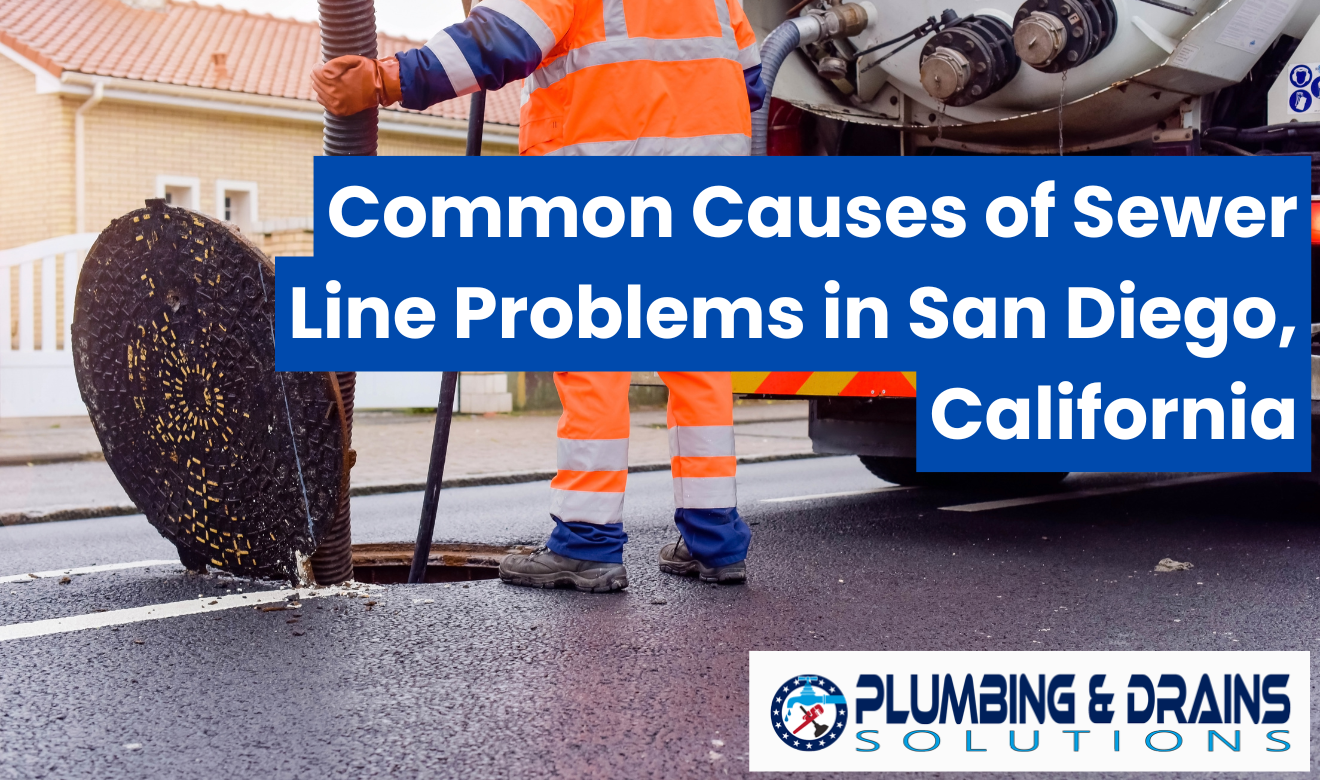
Executive Summary
Sewer line issues in San Diego are most often driven by aging clay/cast-iron pipes, roots, soil shifting, grease, and corrosion—and they tend to show up as multi-fixture backups, odors, and recurring clogs. The article emphasizes that the most reliable path to a lasting fix is camera-based diagnosis followed by the repair method that matches the exact failure.
Key Takeaways
- Multi-fixture symptoms signal a main line problem: When toilets, showers, and sinks back up together (often with gurgling and sewage odors), it typically points to a sewer line restriction rather than a single drain clog.
- Camera inspection should come before any major repair: Sewer video inspection provides visual proof (roots, cracks, offsets, bellies, corrosion) so repairs address the real cause instead of repeating temporary fixes.
- San Diego’s common failure modes are predictable: Root intrusion, corrosion/scaling in cast iron, offset joints from soil movement, pipe bellies, and grease/wipes buildup are the most frequent reasons homeowners need sewer line repair.
- “Top rated” providers differentiate through process and accountability: Quality contractors document findings, explain multiple options, follow code/permit requirements when needed, and provide a prevention plan—not just a quick recommendation to replace everything.
- Cost depends on access, scope, and restoration—not just the clog: Pricing varies by line depth, affected length, pipe material, blockage type, and surface restoration needs, making accurate diagnosis the best way to control total cost.
Sewer line problems in San Diego are most commonly caused by aging clay or cast-iron pipes, tree root intrusion, shifting soil, grease buildup, and corrosion. If your drains are slow, you smell sewage near the yard, or multiple fixtures back up at once, it’s often a main line issue that may need top rated sewer line repair San Diego homeowners can trust.
For example, tree roots can slip into tiny cracks and block the line, leading to repeated clogs even after snaking. In older neighborhoods, brittle clay pipes can crack as the ground settles, causing leaks that show up as soggy patches or unusually green grass. Even everyday habits—like pouring cooking grease down the sink—can create thick buildup that narrows the pipe and triggers backups during heavy use.
What Are the Most Common Signs You Need Sewer Line Repair?
When homeowners search for top rated sewer line repair San Diego, they’re usually dealing with repeated backups, sewer odors, or a sudden change in how multiple drains behave. The key is spotting the pattern: a single slow sink is often a local clog, but multiple slow drains can point to a main line problem.
Quick signs that often indicate a main sewer line issue
- Multiple fixtures back up at once (toilet, shower, and sinks acting up together)
- Gurgling sounds in toilets or drains after running water elsewhere
- Sewage smell inside the home or near the yard cleanout
- Water backing up into tubs or shower pans when you flush
- Unexplained soggy spots or extra-green patches in the yard
- Recurring clogs that return soon after snaking
If you’re noticing these together, it’s smart to consider an inspection and, if needed, top rated sewer line repair San Diego residents rely on to stop repeated damage.
How to tell the difference between a drain clog and a sewer line problem
- One drain is slow: often a localized blockage (hair, soap, food)
- Several drains are slow: often a main line restriction (roots, collapse, heavy buildup)
- Toilet overflows when shower runs: commonly a main line capacity issue
For more context on how clogs start and why they come back, see reasons for sewer line backing up.
How Does Sewer Line Repair Work in San Diego Homes?
Most reputable teams follow a “diagnose first” process before recommending top rated sewer line repair San Diego solutions. That matters because the fix for a root intrusion isn’t the same as a belly (sag) in the pipe or a collapsed clay section.
Step-by-step process homeowners can expect
- Identify symptoms: where backups occur, when odors show up, whether rain makes it worse.
- Locate access points: cleanout in the yard, near the house, or sometimes on the roof vent path depending on layout.
- Camera the line: a diagnostic camera pinpoints roots, offsets, breaks, corrosion, or grease.
- Confirm the repair scope: spot repair vs. replacement vs. cleaning plus ongoing prevention.
- Perform repair: repair method depends on pipe condition, depth, and city requirements.
- Post-repair verification: camera re-check and flow test to confirm proper grade and full opening.
One of the most useful tools is Sewer Video Inspection, because it provides visual proof of the problem and reduces guesswork—an important part of choosing top rated sewer line repair San Diego options based on facts, not assumptions.
What “top rated” repair usually means in practice
- Evidence-based diagnosis (camera findings and clear explanation)
- Code-aware work (permits/standards as required for sewer work)
- Repair that matches the failure mode (not a one-size-fits-all approach)
- Clear prevention plan (root control, grease habits, maintenance schedule)
What Causes Sewer Lines to Fail Over Time?
San Diego has a mix of older housing stock and varied soil conditions. Over decades, that combination can lead to cracks, separations, or corrosion—especially in clay and cast-iron systems. When people search top rated sewer line repair San Diego, they’re often dealing with age-related failures that were invisible until the line started backing up.
Most common failure modes
- Root intrusion: roots seek moisture and enter through joints or cracks.
- Pipe corrosion: cast iron can corrode and “scale,” narrowing the pipe interior.
- Offset joints: ground movement shifts pipe sections out of alignment, snagging waste and paper.
- Bellying (sagging): a low spot holds standing water and solids, leading to recurring clogs.
- Grease buildup: fats, oils, and grease (FOG) cool and harden inside pipes.
A real-world factor: grease and “flushable” wipes
Municipal wastewater agencies across the U.S. consistently identify fats, oils, grease, and wipes as major contributors to blockages. A widely cited example is New York City’s long-running public campaign about fatbergs—massive grease-and-wipe blockages—underscoring that everyday habits can cause major sewer failures. While your home line is smaller than a city main, the mechanism is the same: buildup restricts flow and increases backup risk, eventually driving calls for top rated sewer line repair San Diego services.
How to Choose Top Rated Sewer Line Repair San Diego Homeowners Can Trust
“Top rated” should mean more than reviews. Sewer work is high-impact: it can affect your home, neighbors (in shared lateral situations), and public health. Use criteria that reflect quality and accountability.
Checklist to evaluate a sewer repair provider
- Uses camera diagnostics and shows you the footage
- Explains multiple options (cleaning, spot repair, lining/replacement if applicable)
- Provides a written scope with what’s included and excluded
- Understands permitting and local inspection requirements when a replacement is needed
- Describes how they protect the property (dust control, landscaping, concrete patch plan)
- Talks prevention: roots, grease habits, maintenance intervals
If a contractor skips diagnosis and goes straight to “replace everything,” get a second opinion. Quality top rated sewer line repair San Diego outcomes start with confirming the exact failure point and cause.
Cost: What Does Sewer Line Repair Typically Cost in San Diego?
Costs vary widely because sewer lines vary widely—depth, access, pipe material, and the length of damaged section all matter. The best way to control cost is accurate diagnosis, so you fix the right thing once.
Main pricing variables
- Length of line affected (spot repair vs. full lateral)
- Depth and accessibility (under landscaping, driveway, slab)
- Pipe material (clay, cast iron, ABS/PVC)
- Type of blockage (roots vs. collapse vs. grease)
- Restoration needs (concrete, tile, landscaping)
- Permits and inspections for replacement work
Typical ranges (inspection and cleaning vs. repair)
Because pricing changes quickly by neighborhood, access, and scope, you’ll often see estimates grouped like this:
| Service type | Best for | What affects final cost most |
|---|---|---|
| Camera inspection | Finding roots, cracks, offsets, bellies | Access to cleanout, line length, documentation needs |
| Mechanical drain cleaning / snaking | Soft blockages, small root intrusion | Severity of blockage, repeat visits, pipe condition |
| Hydro jetting | Grease scale, heavy buildup, preventive cleaning | Buildup thickness, pipe fragility, access, safety controls |
| Spot repair / section replacement | Localized break, collapse, offset joint | Depth, excavation/restoration, permits, surface type (concrete/landscape) |
Homeowners looking for top rated sewer line repair San Diego providers often save money long-term by pairing camera inspection with the right corrective action (not just repeated snaking).
Why Sewer Video Inspection Matters Before Any Repair
A camera inspection helps prevent “repairing the symptom” while missing the real cause. It also documents whether the problem is grease, roots, an offset joint, or a collapse.
What a sewer camera can reveal (and why it changes the repair plan)
- Roots at joints: may need cutting plus root prevention
- Cracks and separations: may justify spot repair or replacement
- Corrosion and scaling: can indicate cast-iron deterioration
- Standing water (belly): often requires regrading/replacing a section
- Foreign objects: construction debris, broken fittings, or long-term buildup
That’s why top rated sewer line repair San Diego approaches typically start with visual confirmation—especially when the issue is recurring.
How to Prevent Future Sewer Backups After Repairs
After you’ve handled the immediate issue, the goal is to reduce the chance of a repeat event. Prevention is especially important in older San Diego neighborhoods with clay or cast-iron lines, where top rated sewer line repair San Diego calls can become frequent if habits and maintenance don’t change.
Best practices that reduce clogs and backups
- Keep grease out of drains: wipe pans with a paper towel; dispose of oil in a sealed container.
- Avoid “flushable” wipes: even if they flush, they can snag on rough pipe walls or roots.
- Use strainers: kitchen and shower strainers stop hair and food solids.
- Schedule preventive cleaning if roots are known to intrude in your area.
- Fix slow drains early: waiting increases the chance of a full backup.
When hydro jetting is the right maintenance tool
For grease, sludge, and heavy buildup, hydro jetting can restore pipe diameter more thoroughly than snaking. It’s not always appropriate for severely deteriorated pipes, which is another reason camera diagnostics matter for top rated sewer line repair San Diego planning.
What to Do Right Now If Sewage Is Backing Up
Active sewage backup is a health hazard. The U.S. Centers for Disease Control and Prevention (CDC) notes that sewage can contain germs that cause illness, and cleanup requires careful protective steps. If you have a backup, treat it as contaminated water until proven otherwise.
Immediate steps (safe, homeowner-friendly)
- Stop using water: no flushing, showers, laundry, or dishwashing.
- Keep kids and pets away from affected areas.
- Turn off HVAC if needed to reduce odor spread (especially if vents are pulling air from affected zones).
- Document the damage with photos for insurance if applicable.
- Arrange professional diagnosis (camera inspection) and cleanup if sewage entered living space.
Once the flow is stopped and the line is cleared or repaired, appropriate sanitation is critical. If water has spread through flooring or drywall, consider a qualified Water Damage Restoration Service to reduce the risk of lingering contamination and structural issues—often part of resolving a top rated sewer line repair San Diego emergency the right way.
What Materials and Methods Are Common in Sewer Line Repair?
Repair methods depend on the pipe’s condition and failure type. Older clay and cast-iron lines often need different solutions than newer ABS/PVC systems.
Common pipe materials found in older homes
- Clay: durable but brittle; joints can separate; roots commonly intrude.
- Cast iron: strong but can corrode internally and restrict flow over time.
- ABS/PVC: smoother interior; fewer joint issues when properly installed; can still be damaged by settlement or improper slope.
Common repair approaches (in plain terms)
- Cleaning + root cutting: best when the pipe is intact but intruded.
- Spot repair: replacing only the broken or offset section.
- Partial or full replacement: when multiple failures exist or pipe has reached end-of-life.
Learning the basics of how plumbing systems work helps homeowners understand why slope, venting, and pipe condition directly affect backups—and why top rated sewer line repair San Diego recommendations should match what the line is actually doing underground.
Why San Diego Soil Movement and Trees Make Sewer Problems Worse
Even a well-built line can be stressed by changing conditions. Soil movement can create offsets at joints or form bellies that trap waste. Meanwhile, mature landscaping can send roots toward tiny leaks at joints.
A quick example of how this plays out
In a typical older neighborhood scenario: a clay line develops a hairline crack at a joint, roots sense moisture and enter, and solids start snagging. Snaking restores flow temporarily, but the roots return and the clog repeats—until a camera inspection reveals the true cause and the homeowner pursues top rated sewer line repair San Diego solutions like targeted section replacement or long-term root mitigation.
“Done Once, Done Right” Sewer Repairs: What Real Pros Bring to the Job
When you’re investing in top rated sewer line repair San Diego work, the difference is rarely just equipment—it’s process, documentation, and code-aware execution.
Credentials and professionalism that signal quality
- Licensed, insured plumbing contractor (verify current status with California’s Contractors State License Board)
- Technicians trained in sewer diagnostics (camera interpretation and jobsite safety)
- Knowledge of cross-connection and backflow risk (especially when backups are involved)
- Clear safety and sanitation practices for sewage exposure
- Workmanship warranty in writing and documentation of before/after condition when possible
When these pieces are in place—accurate inspection, the right repair method, and a prevention plan—you’re no longer guessing. You’re solving the underlying problem with top rated sewer line repair San Diego homeowners can trust for lasting performance.
Frequently Asked Questions
Stop Guessing—Get Sewer Line Answers Fast in San Diego
If slow drains, sewer odors, or multiple backups are starting to feel like your home’s new normal, it’s time to get eyes on the problem—before a small issue turns into a messy (and expensive) emergency. Affordable Plumbing Repair makes it simple: start with a sewer video inspection, pinpoint what’s actually happening underground, and get a clear plan for top rated sewer line repair San Diego homeowners can count on—done right the first time.


