
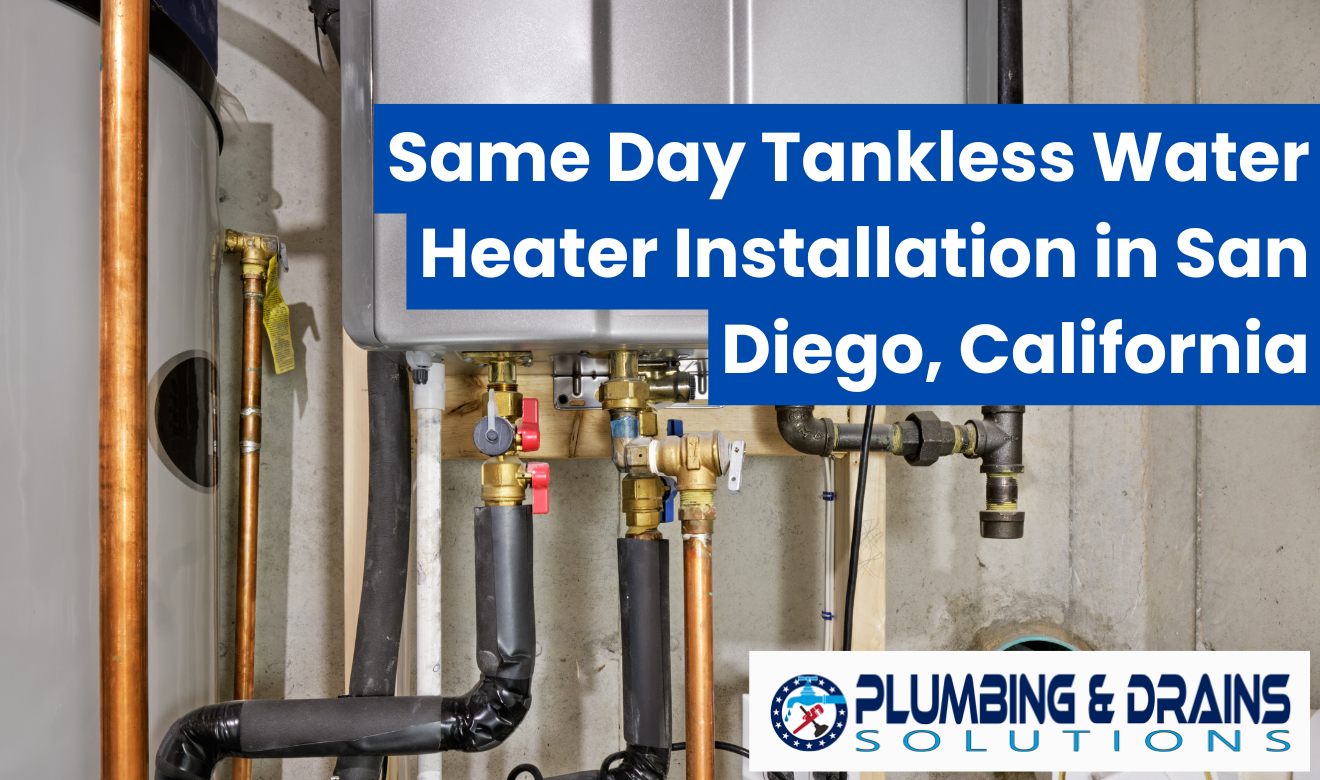
Executive Summary
Same day tankless water heater installation San Diego is achievable when a technician can verify and support the unit’s real load (GPM + temperature rise) and complete required gas, venting, electrical, and condensate connections without major rework. The definitive “done right” outcome is a correctly sized, code-compliant install that is commissioned on-site with stable temperatures at multiple fixtures and inspection-ready safety items.
3 Core Insights
- Same-Day Depends on Utilities, Not Promises: A true same-day install hinges on adequate gas line/meter capacity, feasible vent routing/clearances, available electrical supply, and (for condensing units) a workable condensate drain path.
- Sizing Is a Field-Verified Calculation: Pros size tankless units using measured incoming water temperature plus peak simultaneous fixture demand, then validate performance against manufacturer charts rather than advertised max GPM.
- Commissioning Proves the Install Is Finished: Before leaving, installers should confirm leak-free gas/water connections, acceptable dynamic gas pressure under load, correct vent/condensate function, and stable outlet temperature during simultaneous draws.
Same day tankless water heater installation San Diego is a rapid plumbing and gas service that replaces a failing water heater with an on-demand unit and restores hot water within hours. Most San Diego installs start with a same-visit load calculation in GPM and temperature rise, based on incoming water temperature and peak demand from showers, laundry, and dishwashers. A typical example is a 2-bathroom home in Clairemont needing enough flow for a shower and a dishwasher at the same time, which requires proper unit sizing, correct venting path, and safe combustion air. Technicians usually verify the existing gas line diameter and length, confirm the meter capacity, and check static and dynamic gas pressure before setting the unit. Many retrofits also require a new dedicated electrical circuit for ignition and controls, plus an external condensate drain route for condensing models. In San Diego, permits and code checks commonly focus on earthquake strapping where applicable, TPR discharge routing if a storage tank is removed, and correct clearances around vent terminations near windows and eaves. A same-day job often includes flushing the water lines, installing isolation valves for future descaling, and confirming outlet temperature stability at multiple fixtures before the crew leaves.
What “Same-Day” Tankless Installation Really Means in San Diego
Same-day tankless installation means the job is planned, verified, and completed in one service window—usually by confirming gas, venting, water piping, and electrical requirements before the unit is hung and fired. In practice, “same-day” is achievable when the existing utilities can support the new appliance without major re-piping or structural modifications.
A tankless retrofit is faster when the new unit can reuse an existing vent route (or a straightforward new sidewall termination), the gas meter has adequate capacity, and the gas line can deliver required volume at code-compliant pressure. If those prerequisites are not met, a safe installation may require additional work (for example, gas line upsizing, adding a condensate neutralizer for a condensing unit, or correcting combustion air openings), which can extend the timeline even if hot water is restored quickly.
Tankless Sizing: GPM + Temperature Rise (How Pros Do It)
Correct sizing is based on peak gallons-per-minute demand and the required temperature rise from incoming water temperature to setpoint. A proper calculation prevents “cold sandwich” events, lukewarm showers, and nuisance shutdowns from over- or under-firing.
Technicians typically calculate:
- Peak simultaneous demand (GPM): overlapping use from showers, faucets, dishwasher, laundry, etc.
- Temperature rise (°F): desired outlet temperature minus incoming cold-water temperature.
- Fixture reality: actual flow at fixtures depends on flow restrictors, pressure, and mixing valves.
San Diego incoming water temperature varies seasonally and by micro-area; installers often verify at a hose bib or laundry cold line with a thermometer rather than relying on assumptions. From there, they match the load to the manufacturer’s published performance charts (GPM at a given temperature rise), not just the marketing “max GPM.”
Same-Visit Site Check: The Non-Negotiable Field Verifications
Same-visit verification focuses on gas delivery, venting/air, water piping, electrical supply, and drainage for condensate. These checks are what separate a fast installation from a rushed one.
During a standard same-day assessment, a technician should document and validate:
- Gas line sizing and developed length: diameter, material, total run length, and fittings count (equivalent length).
- Gas meter capacity: whether the meter and regulator can supply the additional BTU load of the tankless unit along with existing appliances.
- Static and dynamic gas pressure: measured under load to confirm pressure remains within the appliance rating plate requirements.
- Venting route: material type, termination location, and clearances; condensing vs non-condensing dictates vent material.
- Combustion air: indoor air volume or dedicated openings, or direct-vent configuration where applicable.
- Electrical: dedicated circuit if required by manufacturer instructions, proper receptacle/connection method, and correct polarity/ground.
- Condensate management (condensing units): drain path, air gap where required by local practice, and whether a neutralizer is required/desired to protect piping.
These checks align with California’s adoption of the Uniform Plumbing Code (UPC) via the California Plumbing Code, and the requirement to follow the manufacturer’s installation instructions as part of the listing and labeling of the appliance.
Permitting & Inspections in San Diego: What Inspectors Commonly Look For
Permits and inspections focus on life-safety items: fuel-gas integrity, venting/termination safety, seismic considerations where applicable, and correct discharge/drain routing. A code-compliant installation is designed to pass inspection on the first trip without “field improvisation.”
While requirements can vary by jurisdiction and project scope, common inspection focal points include:
- Fuel gas: approved pipe material and joints, sediment trap (drip leg) where required, accessible shutoff valve, and leak testing.
- Venting/termination clearances: terminations placed per manufacturer instructions and adopted code clearances from openings, eaves, and property lines.
- Temperature & pressure protection: confirmation that any required relief discharge routing is compliant for remaining equipment and that hot water delivery temperatures are controlled to prevent scalding.
- Water piping and valves: isolation/service valves to allow descaling and maintenance.
- Electrical: correct connection method and protection; outdoor receptacles/weather protection as applicable.
Because many San Diego homes are retrofits, inspectors also pay attention to “patchwork” issues—like unsupported vent runs, unsealed wall penetrations, or condensate drains that terminate improperly.
Key Installation Options (Indoor vs Outdoor, Condensing vs Non-Condensing)
The fastest same-day installs typically use an outdoor-rated unit or a straightforward direct-vent configuration with a short vent run. The right choice depends on efficiency goals, climate exposure, space constraints, and vent feasibility.
Common decision points:
- Outdoor-rated tankless: avoids interior venting complexity but must be protected from weather exposure per manufacturer guidance; freeze protection features and electrical supply are critical.
- Indoor non-condensing: usually higher vent temperature and often requires Category III stainless venting; may be simpler for some retrofit paths but less efficient than condensing.
- Indoor condensing: higher efficiency and typically uses PVC/CPVC/PP venting per listing; requires condensate drain planning and sometimes a neutralizer.
In all cases, the installed system must match the appliance listing, the local adopted plumbing/mechanical codes, and the manufacturer’s instructions for vent material, vent length limits, slope, and termination.
Core Specs & Local Guidance (Quick Reference Table)
This table consolidates the high-impact technical checkpoints that determine whether a tankless retrofit is safe, compliant, and truly achievable within a same-day visit. It’s intended as a homeowner-friendly reference for what should be verified on-site.
| Feature / Metric | Specifications | Local Guidelines |
|---|---|---|
| Sizing inputs | Peak GPM (simultaneous fixtures) + temperature rise; verify against manufacturer performance charts | Verify incoming water temperature on-site; size for real peak usage (showers + appliances) |
| Gas supply verification | Confirm meter capacity, pipe diameter, developed length; measure static & dynamic inlet pressure | Work must comply with California Plumbing Code fuel-gas provisions and manufacturer rating plate requirements |
| Venting system | Vent material/type, max equivalent length, slope/condensate handling, termination clearances | Termination location and clearances commonly scrutinized in inspections; follow listing & instructions |
| Condensate (condensing units) | Condensate drain route, trap/prime where required, neutralizer when discharging to sensitive piping | Route to an approved drain point; protect building materials from acidic condensate |
| Serviceability | Hot/cold isolation valves, filter screens, flush ports, accessible shutoffs | Install for maintenance access; enables periodic descaling in hard-water conditions |
| Temperature control | Setpoint control, stable outlet temp under varying flow; mixing/tempering where required | Reduce scald risk; verify at multiple fixtures before sign-off |
Step-by-Step: What a Same-Day Installation Workflow Usually Includes
A same-day workflow is a defined sequence: isolate utilities, remove old equipment, install the new unit with correct venting and gas, then commission and test. Each step has specific pass/fail criteria that must be met before moving forward.
- Pre-start safety: shut off gas and water, verify no active leaks, protect work area, confirm mounting surface.
- Equipment removal: disconnect and remove the old heater; cap/secure lines as needed.
- Mounting and clearances: mount the tankless unit to approved structure, maintain manufacturer clearances for service and combustion.
- Water piping: connect hot/cold with approved materials; add a full-port service valve kit (isolation + purge ports).
- Gas piping: install shutoff valve accessible near the unit; add sediment trap where required; perform leak test.
- Venting: install listed venting components with correct slope/support; seal penetrations and verify termination position.
- Electrical: connect per listing; verify grounding/polarity and that any outdoor connection is weather-protected.
- Condensate (if applicable): route drain to an approved point; secure line and protect finishes.
- Commissioning: purge air from gas line, start unit, confirm combustion/operation per manufacturer procedure.
- Verification: check outlet temperature at multiple fixtures; confirm stable performance with simultaneous use.
- Homeowner handoff: explain descaling schedule, show shutoff locations, and provide permit/inspection guidance.
Because plumbing systems are interconnected, it also helps to understand the broader scope of plumbing fundamentals—especially how pressure, venting, and drainage interact with appliances.
Common Retrofit Challenges That Can Change the Timeline
The biggest same-day delays come from gas delivery limitations, vent termination constraints, and missing electrical or drainage paths. Identifying these early is what keeps “same-day” from turning into “next week.”
Issues that frequently require added labor or a second visit:
- Undersized gas line: many older homes have gas branches sized for a tank-type heater, not a high-BTU tankless.
- Meter/regulator constraints: total connected load can exceed meter capacity when combined with furnaces, dryers, and ranges.
- Venting conflicts: termination too close to windows/doors, narrow side yards, or eave restrictions that require rerouting.
- No condensate drain route: especially in garage installs far from a drain or where routing would cross finished spaces.
- Scale and sediment: heavy mineral buildup or debris in supply lines can clog inlet screens and reduce flow stability.
If you suspect mineral buildup or recurring slow drains in the home, pairing the upgrade with professional Drain Cleaning can prevent commissioning issues caused by restricted flow and can improve overall fixture performance.
Post-Install Commissioning: What Should Be Tested Before the Crew Leaves
Commissioning is the final proof that the system operates safely under real demand. The goal is stable temperature, verified gas performance under load, and leak-free connections.
A proper sign-off checklist includes:
- Water-side leak check: inspect all joints under pressure at cold and hot connections.
- Gas leak test: verify no leaks at unions, shutoffs, appliance connector (if used), and drip leg fittings.
- Temperature stability: measure hot water temp at the farthest fixture and at a nearby fixture; confirm it holds during a second fixture draw.
- Flow performance: confirm the unit stays fired at low-flow conditions typical of handwashing (if the model requires a minimum flow rate).
- Condensate verification: confirm condensate flows freely and does not back up into the unit.
- Error code check: ensure no active fault codes; document model/serial and settings.
For long-term reliability, many technicians also install or recommend inlet screen cleaning intervals and periodic descaling based on local water conditions and manufacturer requirements.
Maintenance Planning After a Tankless Upgrade
Tankless systems need routine descaling and inlet screen cleaning to maintain efficiency and consistent temperature delivery. Planning maintenance at installation time protects the heat exchanger and avoids premature failure.
Best-practice maintenance setup includes:
- Isolation/service valves: enables fast descaling without dismantling plumbing.
- Documented flush schedule: follow manufacturer guidance; hardness and usage determine frequency.
- Inlet filter access: confirm the screen is accessible and show the homeowner how it’s serviced.
For homeowners who want to reduce emergency calls, the same approach used for drains—routine prevention—also applies to water heaters. Practical habits like those outlined in tips to keep your drains from getting clogged often correlate with fewer plumbing interruptions overall because they reduce system strain and surprise blockages during high-demand periods.
Hot Water Restored—And Built to Pass Inspection
A fast tankless replacement only counts as a win if it is sized correctly, fueled safely, vented properly, and commissioned with measured results. In San Diego, a “same-day” installation is most reliable when gas capacity, vent routing, condensate drainage, and electrical needs are confirmed up front.
If you want the upgrade to be smooth and inspection-ready, focus on verifiable checkpoints rather than promises:
- Demand-based sizing using real simultaneous fixtures and measured incoming temperature
- Gas line and meter capacity confirmed with static/dynamic pressure testing
- Listed venting installed exactly per manufacturer instructions and local code adoption
- Isolation valves installed for descaling and long-term serviceability
- Commissioning that proves stable outlet temperature at multiple fixtures before sign-off
When those items are handled correctly, on-demand hot water is restored quickly—and the system is set up to operate safely and consistently for years.
Frequently Asked Questions
Need Same-Day Tankless Water Heater Installation in San Diego—Done Right the First Time?
“Same-day” only counts if your tankless unit actually runs safely, holds temperature under real demand, and doesn’t trigger a failed inspection next week. The risky part isn’t hanging the box on the wall—it’s everything behind it: sizing for your real peak GPM and temperature rise, verifying gas meter capacity, confirming static and dynamic gas pressure under load, and installing the correct venting and condensate routing for the exact model you chose.
Try to shortcut those steps and you can end up with lukewarm showers, nuisance shutdowns, error codes from low gas pressure, improper vent termination near windows or eaves, and condensate damage from a poorly planned drain line. Worse, fuel-gas and combustion-air mistakes aren’t “oops” problems—they’re safety problems. That’s why a fast install without a proper field verification can turn into multiple return trips, surprise re-piping costs, and an installation that won’t pass inspection.
Affordable Plumbing Repair handles the unglamorous but critical work that makes same-day possible: on-site load calculations, gas line and meter verification, code-compliant venting, proper electrical setup, isolation valves for future descaling, and commissioning that proves stable hot water at multiple fixtures before we leave. If your home can support a true same-day install, we’ll move quickly. If it can’t, we’ll tell you exactly what needs to change—before you waste money on the wrong unit or a rushed setup.


