
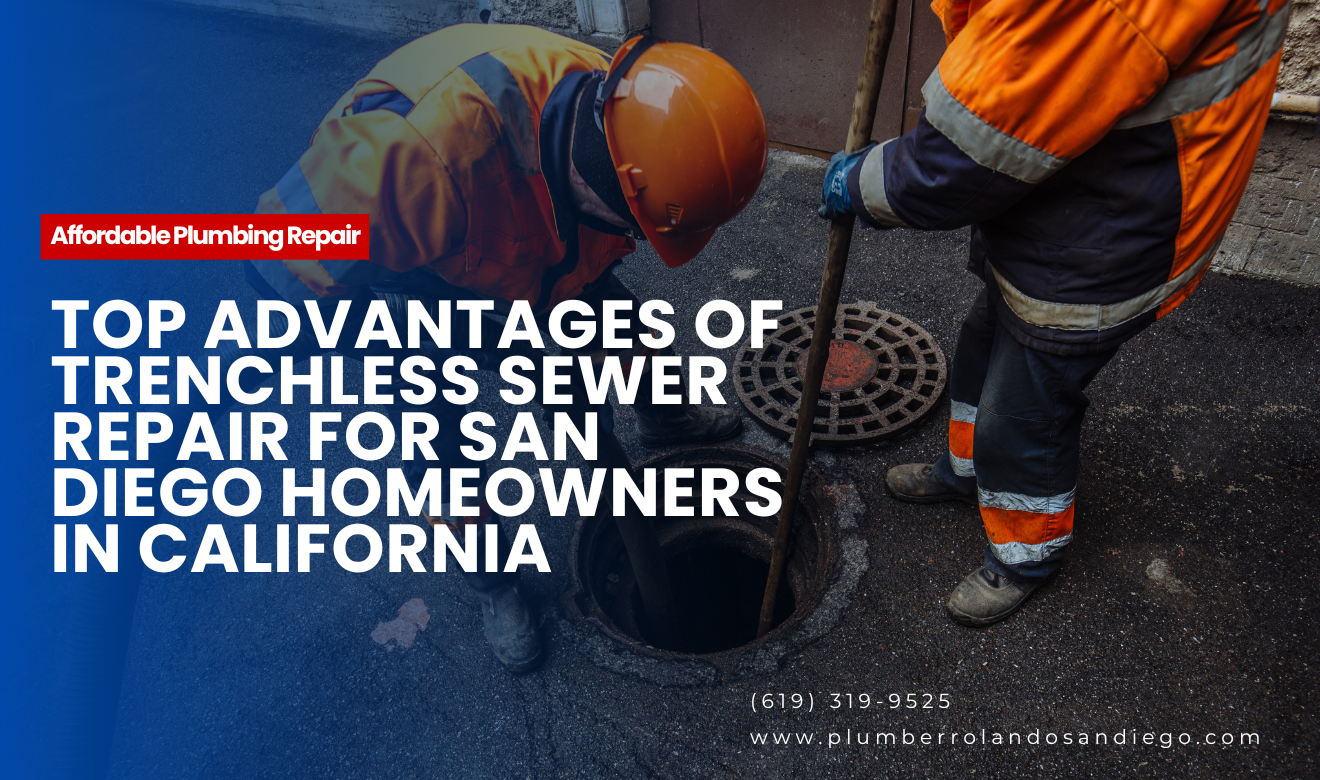
Trenchless sewer repair is often the best choice for San Diego homeowners who want to fix a damaged sewer line without tearing up the yard, driveway, or patio. The trenchless sewer repair benefits San Diego residents notice most are less mess, faster completion, and lower restoration costs compared to traditional digging. For example, if your sewer line runs under stamped concrete or pavers, trenchless methods can repair it without breaking and re-pouring those surfaces. And if roots have cracked an older clay pipe near a garden bed, trenchless repair can restore flow while keeping landscaping largely intact.
What “Trenchless” Sewer Repair Really Means (and Why It Matters in San Diego)
Trenchless sewer repair is a set of modern methods that fix or replace a damaged sewer line with minimal excavation. Instead of opening a long trench across your yard, plumbers typically use one or two small access points, then repair the line from the inside or pull a new pipe through the old route.
For homeowners comparing options, the trenchless sewer repair benefits San Diego properties get are especially important because many neighborhoods have tight lot lines, mature landscaping, older clay/cast-iron piping, and hardscape features like pavers, retaining walls, and stamped concrete.
Plumbing is a licensed trade for a reason—it’s not just about flow, it’s about public health and safe wastewater management. (If you want a quick overview of the trade itself, see plumbing.)
Top Trenchless Sewer Repair Benefits San Diego Homeowners Notice First
If you’re looking for the most practical trenchless sewer repair benefits San Diego residents care about, these are the big ones:
- Less property disruption: Minimal digging protects lawns, hedges, irrigation, and hardscape.
- Faster project timelines: Many trenchless jobs can be completed in a day (site conditions vary).
- Lower restoration costs: You’re often not paying to rebuild patios, walkways, or driveways.
- Durable materials: Modern liners and replacement pipes can resist roots and corrosion better than aging clay or cast iron.
- Reduced risk of collateral damage: Less excavation means fewer chances of disturbing nearby utilities or landscaping features.
When you add it up, these trenchless sewer repair benefits San Diego homeowners get can make trenchless repair the more cost-effective option even if the upfront plumbing work is similar to traditional digging.
Common Trenchless Methods Used for Sewer Lines
Not all trenchless repairs are the same. The best approach depends on pipe material, diameter, depth, and the type of damage. The most common options include:
Pipe Lining (CIPP – Cured-In-Place Pipe)
A resin-saturated liner is inserted into the existing pipe and cured, creating a “pipe within a pipe.” This method is popular when the pipe route is still mostly intact but has cracks, root intrusion, or minor offsets.
One of the major trenchless sewer repair benefits San Diego residents appreciate with lining is that it can seal out roots and stop leaks without removing the old pipe.
Pipe Bursting
A bursting head breaks apart the old pipe while pulling a new pipe into place. This is often used when the old pipe is collapsed, severely deformed, or undersized.
If you need a full replacement but want to avoid destroying your yard, this is one of the key trenchless sewer repair benefits San Diego homeowners should ask about.
Spot Repairs (Localized Trenchless Repair)
Some problems are limited to a small section of pipe. In certain cases, a localized repair can address a short damaged area rather than lining or replacing the entire run.
How Plumbers Decide If Trenchless Is the Right Fit
The “best” method comes from diagnosis, not guessing. A proper evaluation typically includes a camera inspection to confirm:
- Where the damage is located (under slab, yard, driveway, etc.)
- What caused it (roots, corrosion, collapse, offsets, grease buildup)
- How severe it is (hairline cracks vs. belly/sag vs. full collapse)
- Whether the pipe can be cleaned and prepped for lining
In many cases, the trenchless workflow starts with a Sewer Video Inspection so the repair plan is based on real footage and measurements, not assumptions.
This diagnostic step is a big reason the trenchless sewer repair benefits San Diego homeowners get can be so consistent: the fix is targeted to the actual condition of the line.
Featured-Snippet Style: When Trenchless Sewer Repair Is Usually Recommended
Trenchless sewer repair is often recommended when:
- The sewer line runs under concrete, pavers, patios, or driveways
- Your property has mature landscaping you don’t want to disturb
- The pipe has root intrusion, cracks, or leaks but is still mostly passable
- You want to reduce downtime and avoid extended excavation work
These scenarios highlight the real-world trenchless sewer repair benefits San Diego homes can take advantage of—especially where surface restoration is expensive.
Trenchless vs. Traditional Digging: A Simple Comparison
If you’re weighing options, this quick chart helps summarize the differences. (Your exact results depend on access, depth, and pipe conditions.)
| Factor | Trenchless repair | Traditional excavation |
|---|---|---|
| Property impact | Minimal digging; access pits only | Long trench; significant disruption |
| Project speed | Often faster for many repairs | Often longer due to digging/backfill |
| Surface restoration costs | Typically lower | Often higher (concrete/landscape repair) |
| Best use case | Cracked, root-invaded, hard-to-access runs | Severely collapsed lines requiring open access |
This side-by-side view helps clarify why the trenchless sewer repair benefits San Diego homeowners talk about are often tied to avoiding restoration work.
Signs You Might Need Sewer Repair (Before It Becomes an Emergency)
Many sewer line problems start small and get worse over time. Watch for:
- Frequent drain clogs across multiple fixtures (not just one sink)
- Gurgling sounds from toilets or shower drains
- Sewage odors inside or outside the home
- Slow draining that returns shortly after snaking
- Wet spots or greener-than-usual patches in the yard
Even if you’re not ready for sewer repair, addressing early warning signs can reduce damage and preserve the trenchless sewer repair benefits San Diego homeowners get—because the pipe is more likely to be a candidate for lining instead of full excavation.
Why Sewer Cleaning and Prep Work Can Make or Break a Trenchless Job
For lining projects especially, the old pipe has to be properly cleaned and prepared so the liner bonds correctly. That may include:
- Removing grease scale and sludge
- Cutting and clearing roots
- Flushing debris so the liner can be installed evenly
In many homes, a professional cleaning step such as hydro jetting is recommended before lining—because a clean host pipe helps deliver the full trenchless sewer repair benefits San Diego homeowners expect (better flow, fewer call-backs, longer service life).
For preventative habits between professional cleanings, these practical tips can help reduce buildup: tips to keep your drains from getting clogged.
Real-World Examples: Where Trenchless Shines in San Diego Properties
Example 1: Sewer line under a driveway or decorative hardscape
Traditional excavation may require breaking concrete, hauling debris, and re-pouring. With trenchless methods, the repair can often be completed through access points near the cleanout and connection point, preserving the finished surface—one of the standout trenchless sewer repair benefits San Diego homeowners value in upgraded yards.
Example 2: Root intrusion in older clay pipe near landscaping
Roots commonly exploit small joints in clay pipe. Lining can seal joints and create a continuous interior surface that’s harder for roots to penetrate, helping restore reliable drainage while keeping garden areas mostly intact. Again, the trenchless sewer repair benefits San Diego residents see here include less digging and less landscape rework.
Permits, Code, and What Homeowners Should Ask a Contractor
Sewer work can involve permits and inspection requirements depending on the scope and location of the repair. A reputable contractor should be ready to explain local requirements and provide documentation.
When you’re comparing bids, ask these questions:
- Will you perform a camera inspection before and after the repair?
- Which trenchless method are you recommending, and why?
- Is the quote for a spot repair, a full liner, or a full replacement?
- What warranty is included, and what does it cover?
- How will you protect landscaping and hardscape during access pit work?
Clear answers help ensure you get the full trenchless sewer repair benefits San Diego homeowners are expecting—without surprises halfway through the job.
Cost Factors: What Typically Impacts Pricing in San Diego
Exact pricing varies widely, but the biggest cost drivers tend to be:
- Length of the run being lined or replaced
- Pipe diameter and material
- Depth and access (crawlspace, slab, steep yard, limited cleanouts)
- Severity of damage (minor cracking vs. collapse)
- Cleaning and descaling needs before lining
- Number of bends and layout complexity
Even though trenchless equipment and materials can be specialized, the overall budget often improves because the trenchless sewer repair benefits San Diego homeowners get include reduced demolition and restoration.
How Long Do Trenchless Repairs Last?
Service life depends on the method, installation quality, and how the system is maintained. Many modern liners and replacement materials are designed for long-term performance and corrosion resistance.
To maximize longevity after repair:
- Avoid flushing wipes and hygiene products (even “flushable” ones)
- Limit grease and food waste going down drains
- Schedule periodic camera checks if you have mature trees near the line
- Fix recurring clogs early to prevent backups
Good habits protect your investment and help you keep enjoying the trenchless sewer repair benefits San Diego homeowners want: dependable flow with minimal future disruption.
Peace of Mind Starts Below the Surface
When your sewer line is failing, the goal is simple: restore safe, reliable drainage with the least disruption possible. The biggest trenchless sewer repair benefits San Diego homeowners experience—less mess, faster turnaround, and fewer restoration costs—are exactly why trenchless solutions have become a go-to option for many properties.
Choosing the right method starts with accurate diagnostics, code-compliant workmanship, and proper prep/cleanup. Look for licensed, insured plumbing professionals experienced in sewer camera diagnostics, trenchless installation, and post-repair verification so the fix is documented—not just promised.
Done correctly, the trenchless sewer repair benefits San Diego residents rely on can translate into a long-lasting repair that protects your home, your landscaping, and your budget.
Frequently Asked Questions
Save Your Yard—Not Your Sewer Line
If you’re noticing warning signs like slow drains, recurring clogs, or sewer odors, trenchless repair may be the cleanest, fastest way to restore your line without turning your landscaping into a construction zone. Affordable Plumbing Repair can inspect your sewer with a camera, explain your options in plain English, and recommend the most cost-effective trenchless solution for your San Diego home—so you can get back to normal with less mess and fewer restoration costs.


